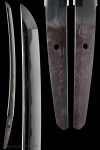
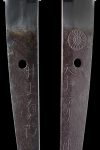
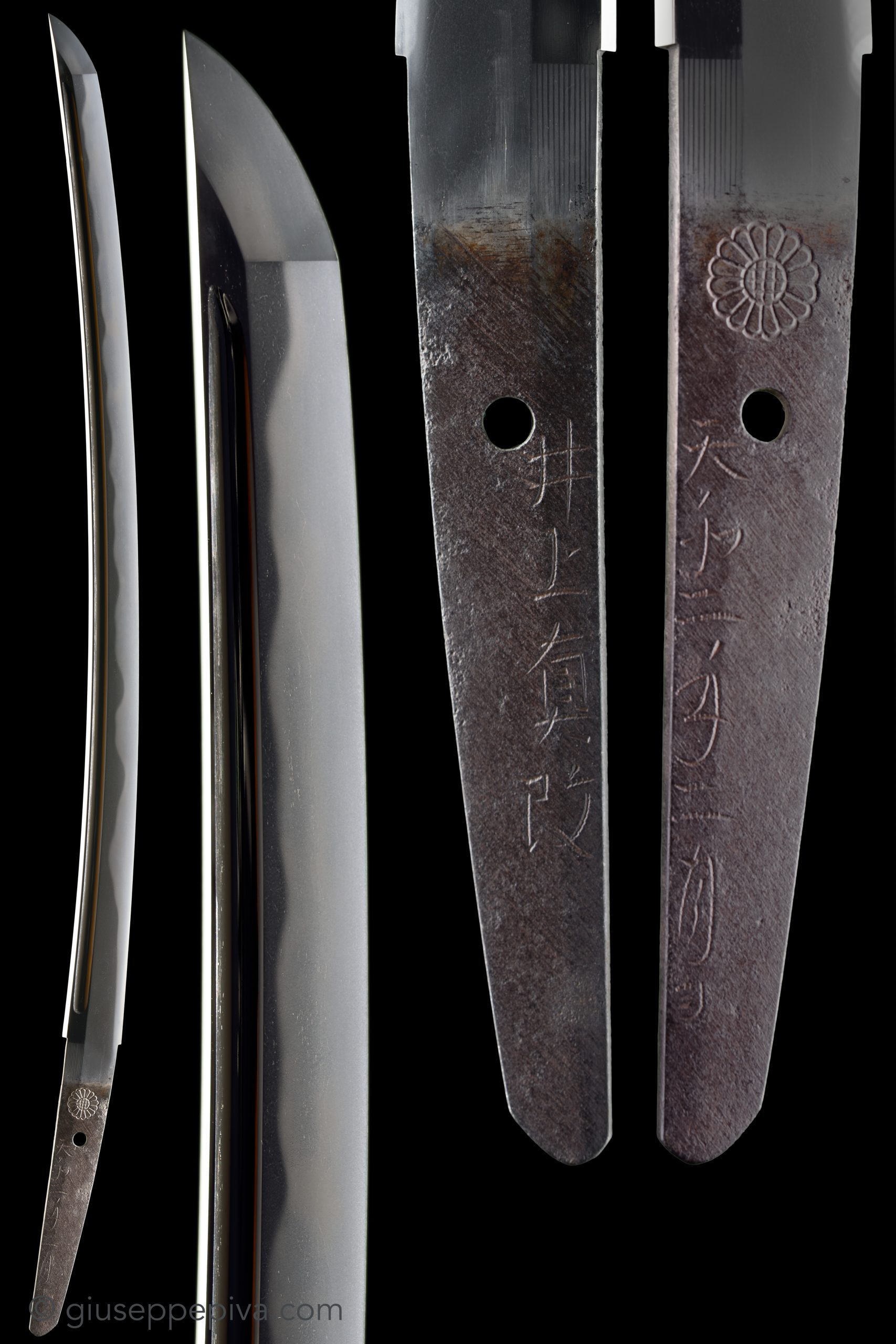
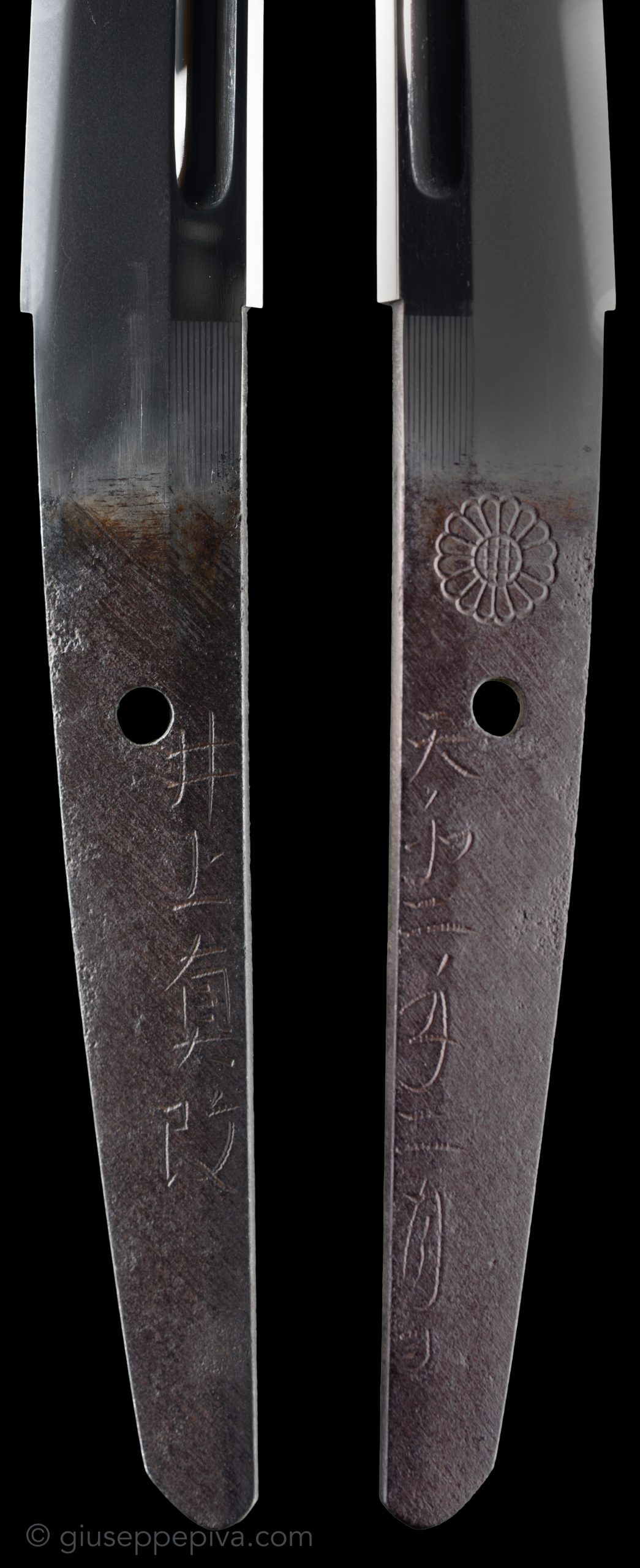
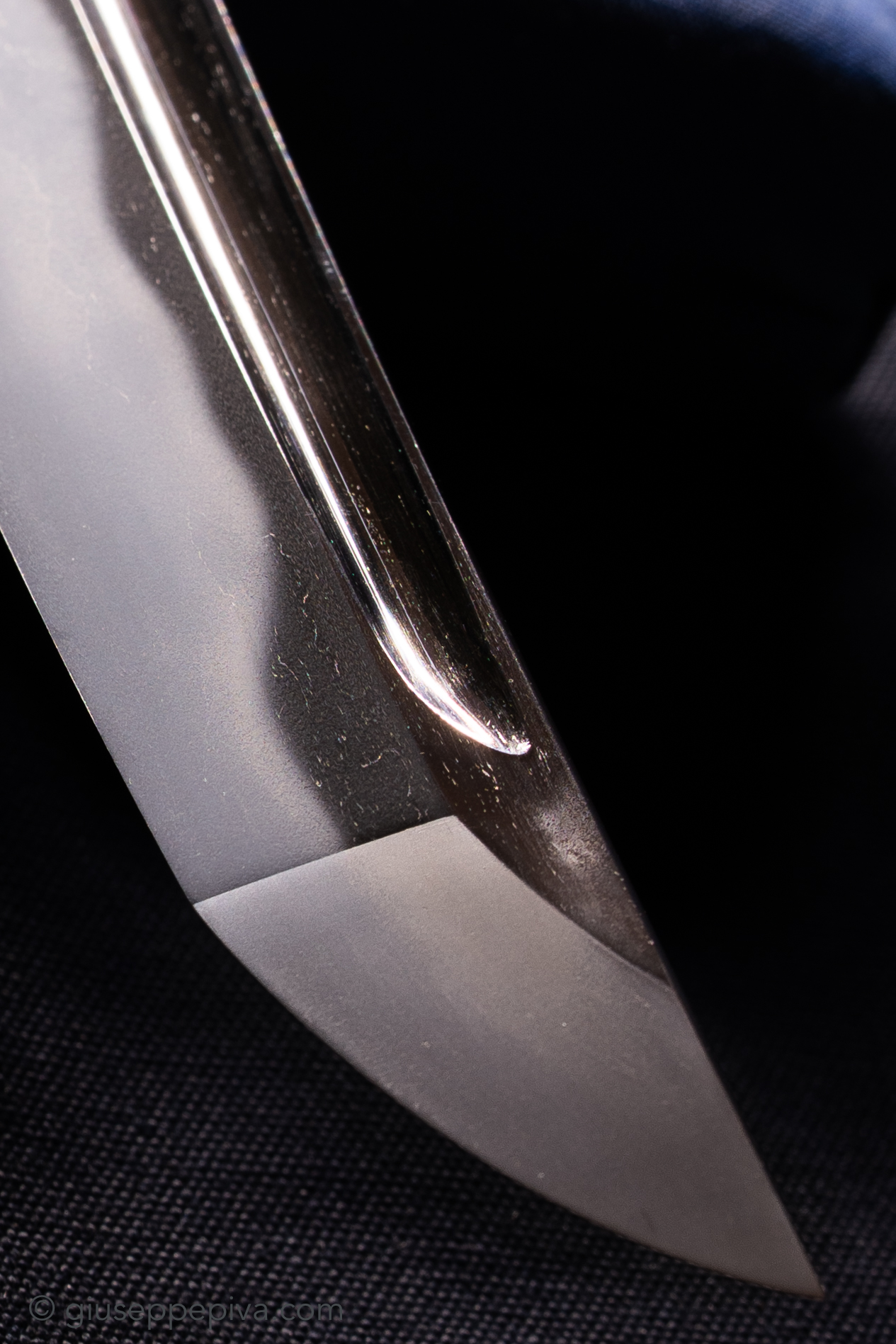
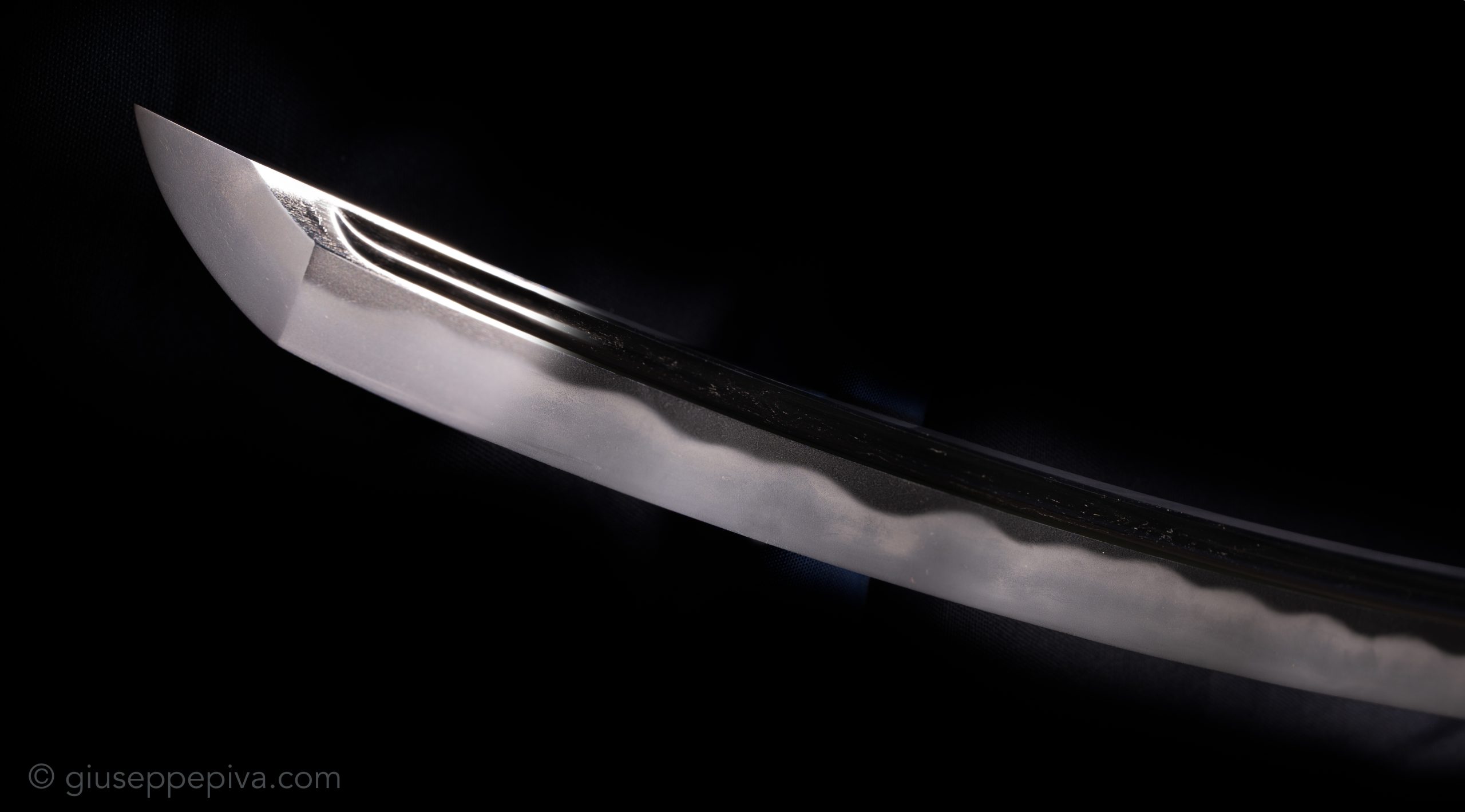
Mei: Inoue Shinkai (kiku-mon) Tenna ninen nigatsu hi (a day in the second month Tenna 2 – 1682)
NBTHK Tokubetsu Hozon Tōken
Fujishiro Estimation Paper (1944) Certificate as “yūshū no saku” (excellent work) + Oshigata in Kakemono
Nagasa [length]: 54.3 cm
Sori [curvature]: 1.8 cm
Motohaba [bottom width]: 3.02 cm
Sakihaba [top width]: 1.8 cm
Motokasane [bottom thickness]: 8.1 mm
Sugata [configuration]: Shinogi-zukuri, iori-mune
Kitae [forging pattern]: Iko-itame hada well grained with jinie. Osaka jigane
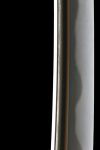
Hamon [tempering pattern]: O-notare in nie deki, yakidashi. Deep nioiguchi. Toran ba. Long Ashi
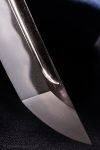
Boshi [point]: Togari gokoro in deep nioiguchi
Origami [paper]: The blade comes with a Tokubetsu Hozon Tōken (Sword Particularly Worth of Preserving) certificate issued by the Nihon Bijutsu Token Hozon Kyokai
Sayagaki [certification on shirasaya]: The inscription by Dr. Sato Kanzan reads: “dated Tenna two, it is not only of an excellent craftmanship but also a valuable reference work. – Blade length ~ 54.5 cm – Written by Kanzan on a lucky day in October of 1959”
This wakizashi is a masterpiece by Inoue Shinkai, one of the most celebrated swordsmiths of Japan.
Inoue Shinkai was the second son of Izumi no Kami Kunisada, the founding master of the Osaka Shinto tradition. In his early career he worked under his father’s name, Kunisada, producing many blades as daisaku, works made by the son but signed by the father. Around 1661 he received imperial permission to engrave the chrysanthemum crest on his tangs, a rare distinction. In 1672 he took Buddhist vows and adopted his final signature, Inoue Shinkai. He died suddenly in November 1682.
Shinkai surpassed his celebrated father in reputation, and together with Tsuda Sukehiro he stands as one of the two supreme masters of the Osaka school. His work evokes the legendary Kamakura-period smith Go Yoshihiro, earning him the epithet “Masamune of Osaka.” His blades are also recorded among the finest cutting swords.
His hamon — whether suguba, o-notare, or gunome midare — is distinguished by an exceptionally wide nioi line, rich nie activity, and a luminous habuchi from which nie spill into the ji. The hamon characteristically widens and grows more active toward the monouchi. The yakidashi angles toward the ha-machi in the manner typical of Osaka Shinto work. Where ara-nie appears, it is invariably of the highest quality.
(Inv. #2114)