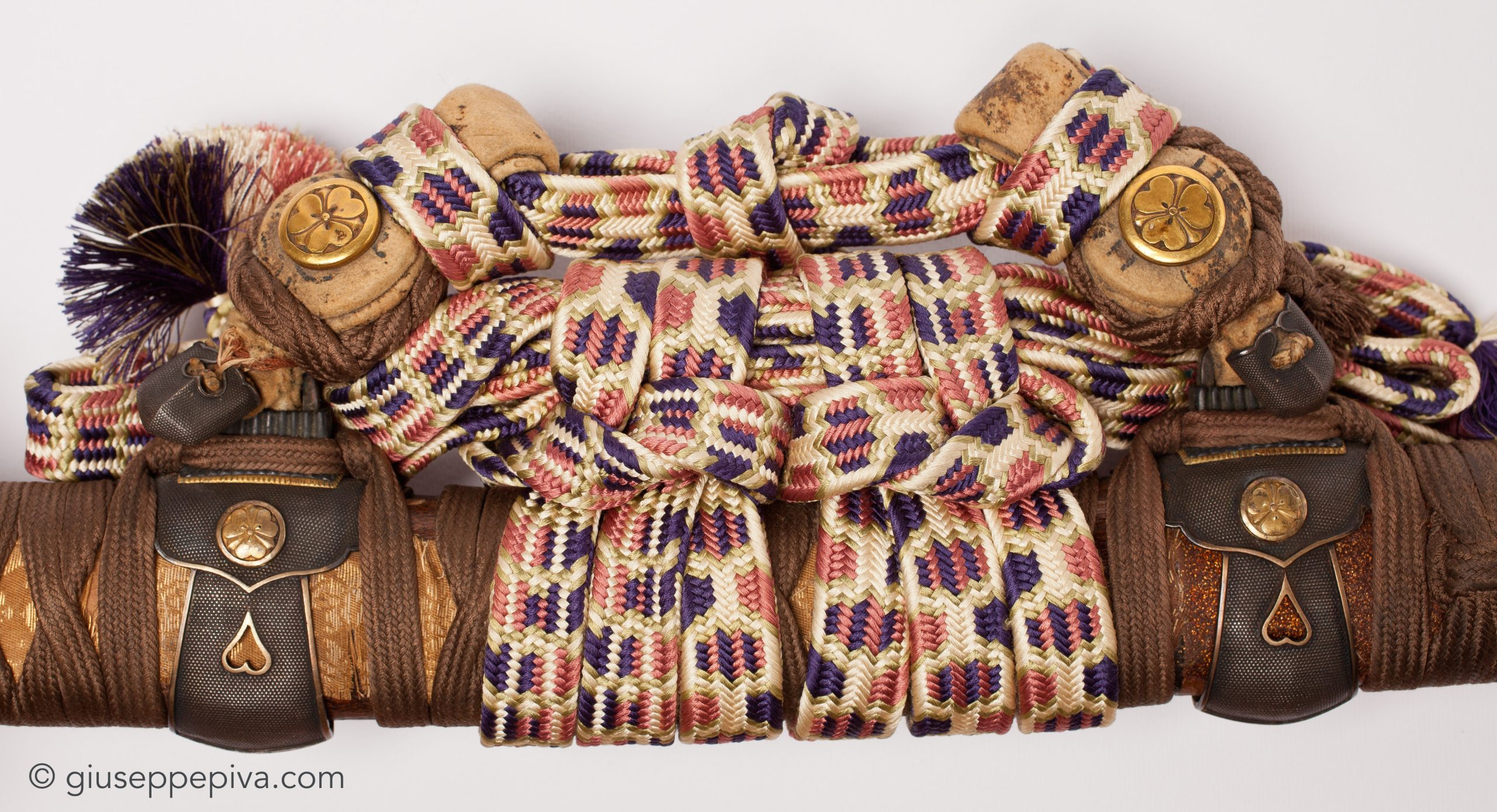
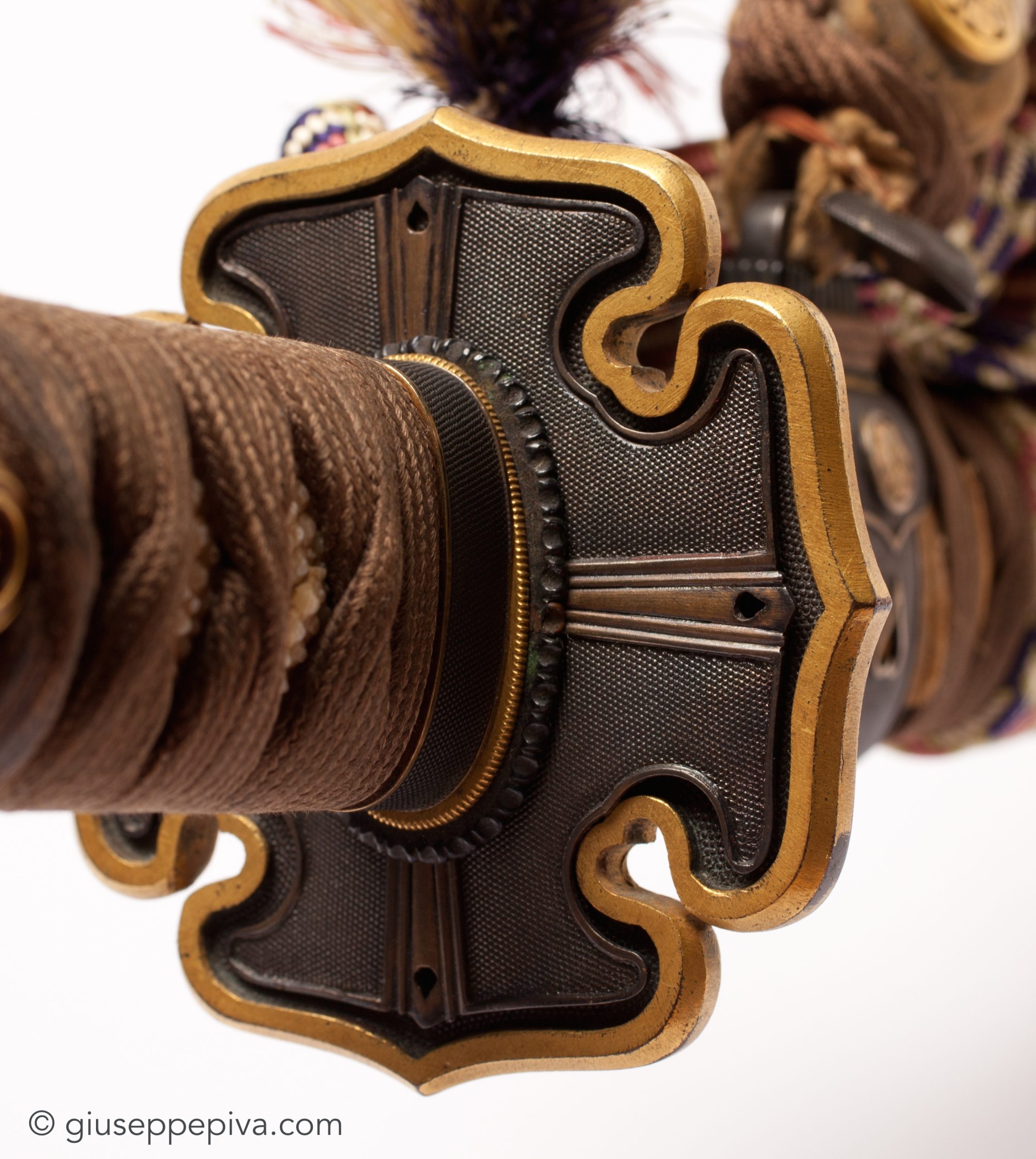
Tachi mountings
Mid-Edo period
Total length: 99 cm.
Origami:
NBTHK Hozon tosogu (May 2008), certificate missing
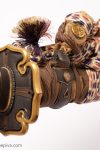
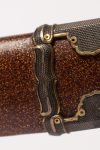
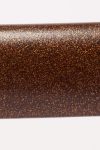
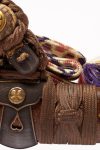
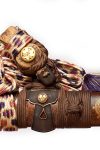
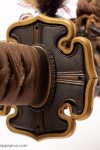
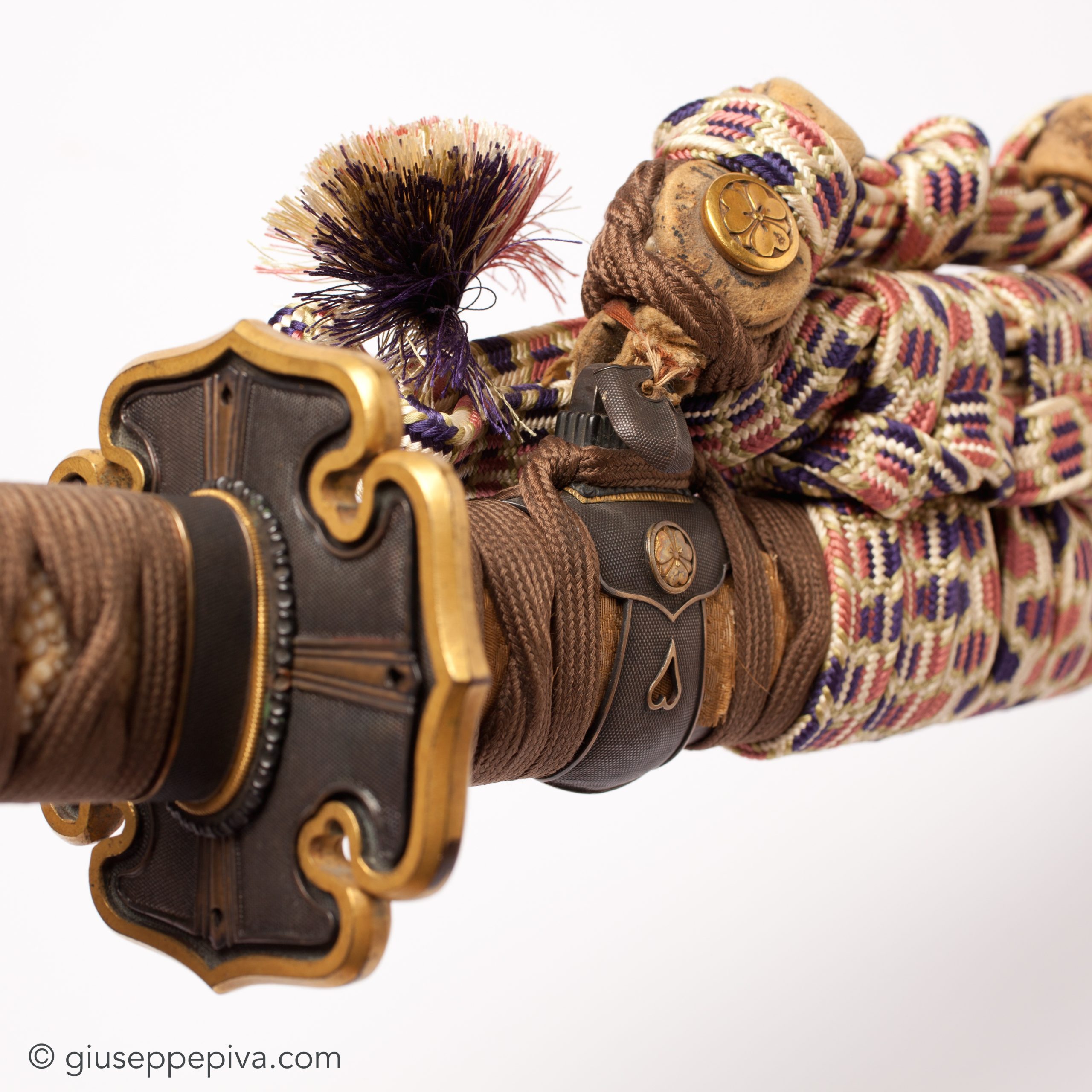
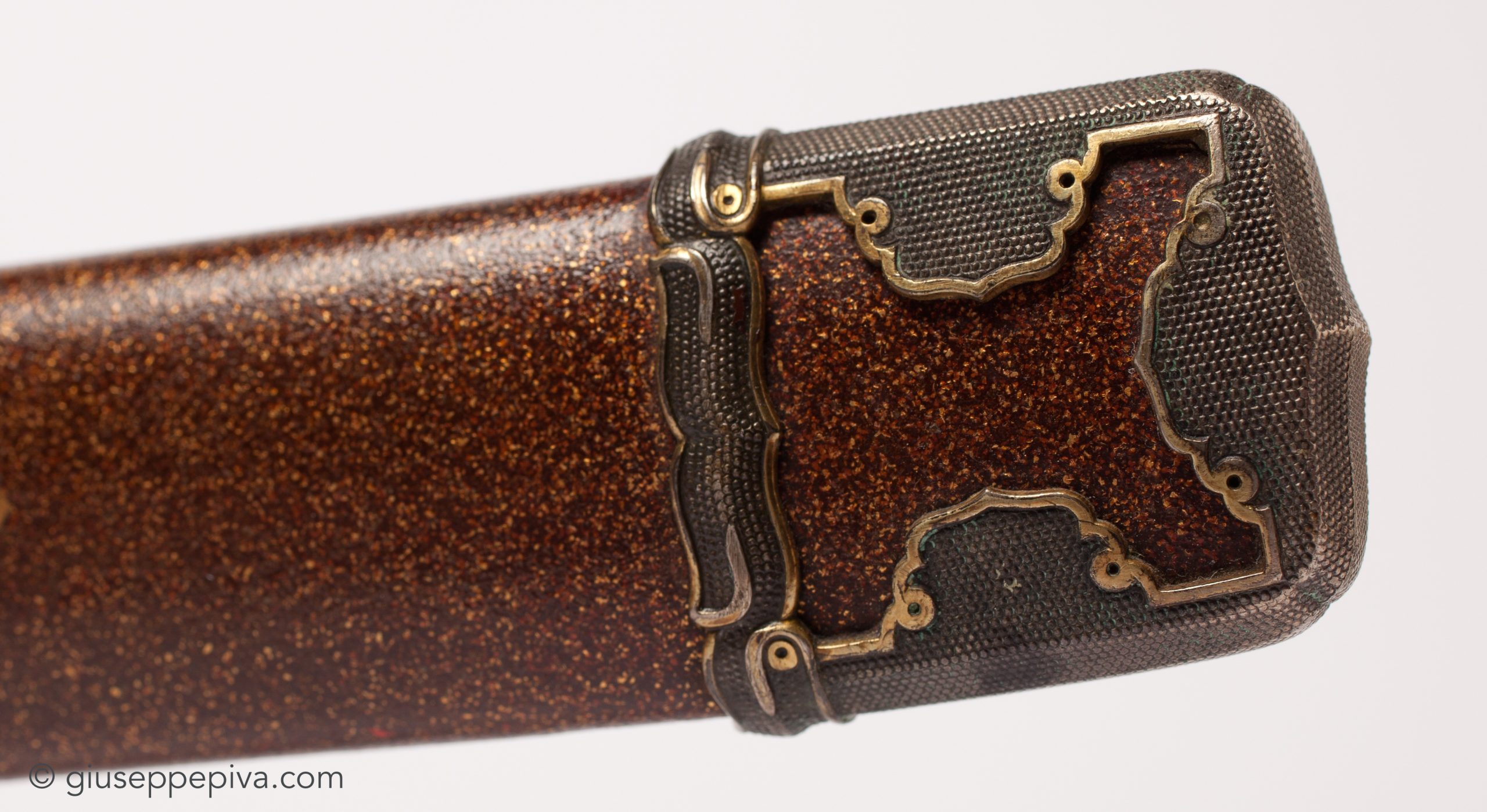
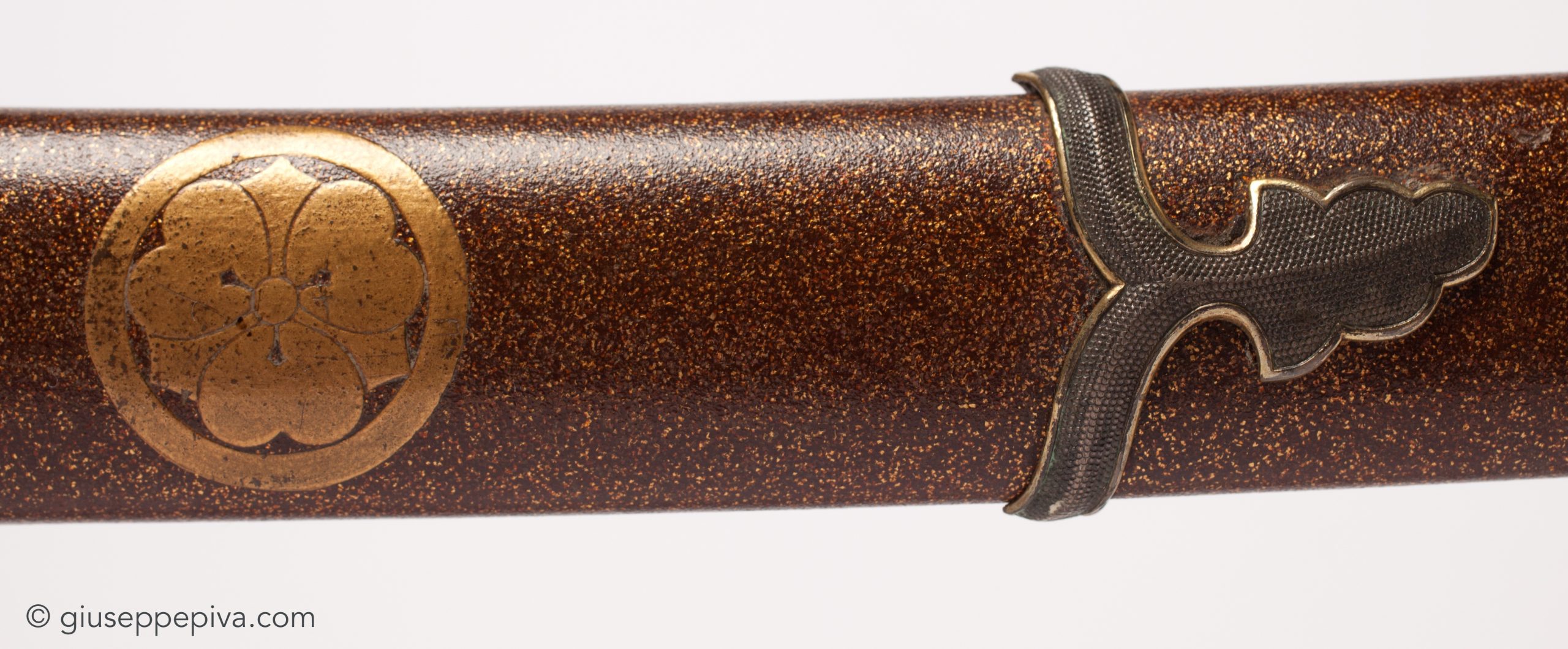
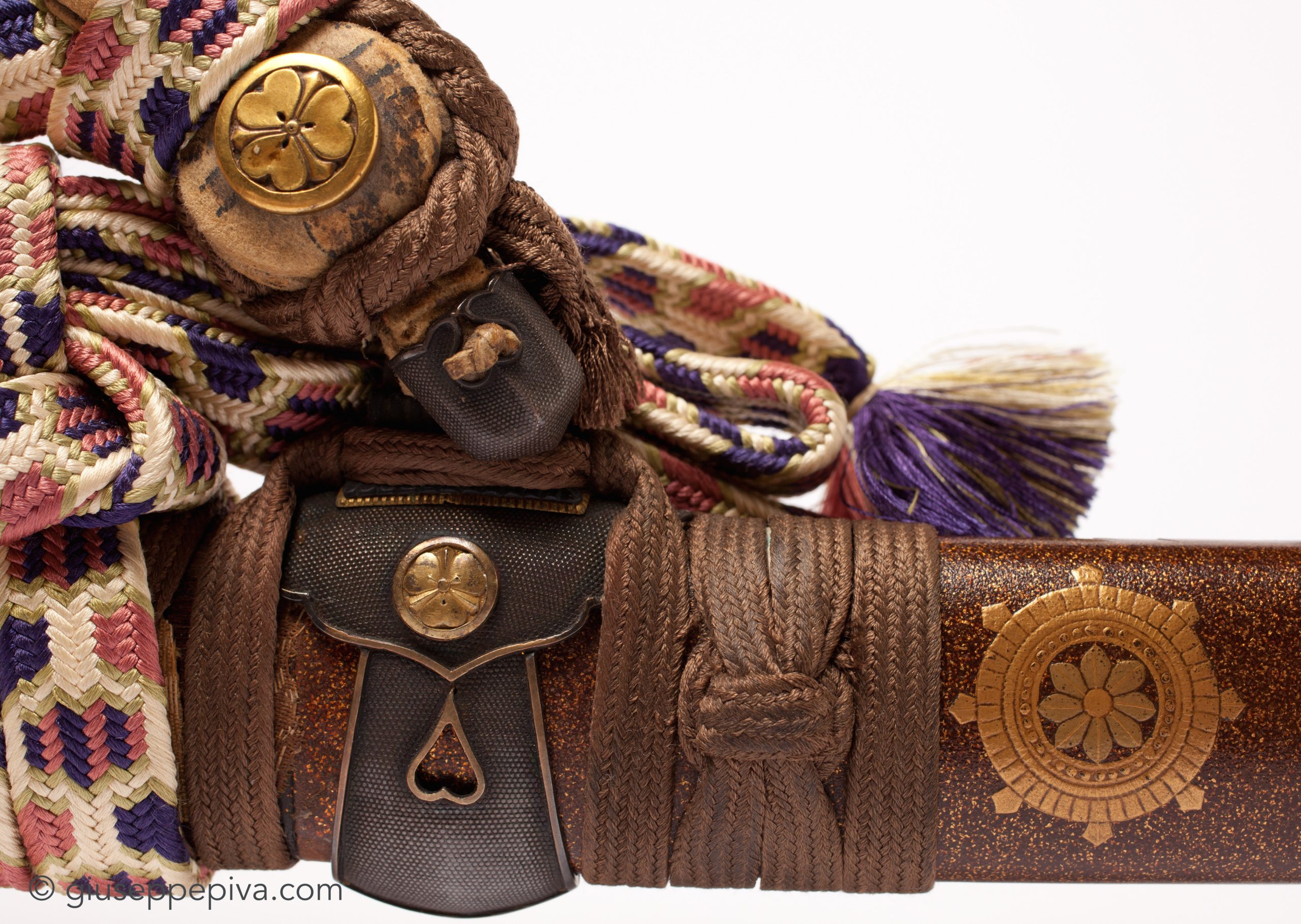
Fittings of this style, in nashiji lacquer decorated with maki-e kamon and shakudo fittings edged with gilded brass, are the most traditional and refined. Although the earliest examples date back to the Muromachi period (1336–1573), the production of itomaki koshirae remained virtually unchanged until the end of the Edo period and beyond.
Tachi-style blades were used when combat took place mainly on horseback and the sword was wielded with one hand: it was worn hanging at the left hip, with the edge pointing downwards, so that it could be drawn comfortably with the right hand. When, in the sixteenth century, the style of combat changed (to two-handed) and the way the sword was carried changed (tucked into the obi with the cutting edge facing upwards), tachi-style fittings continued to be used by high-ranking samurai only on formal occasions as symbols of social status, on a par with an impressive helmet or a fine blade.
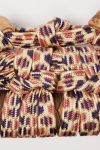
The term ‘itomaki’ refers to the strip of cord (ito) wound (maki) around a section of the scabbard.
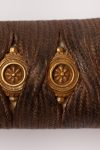
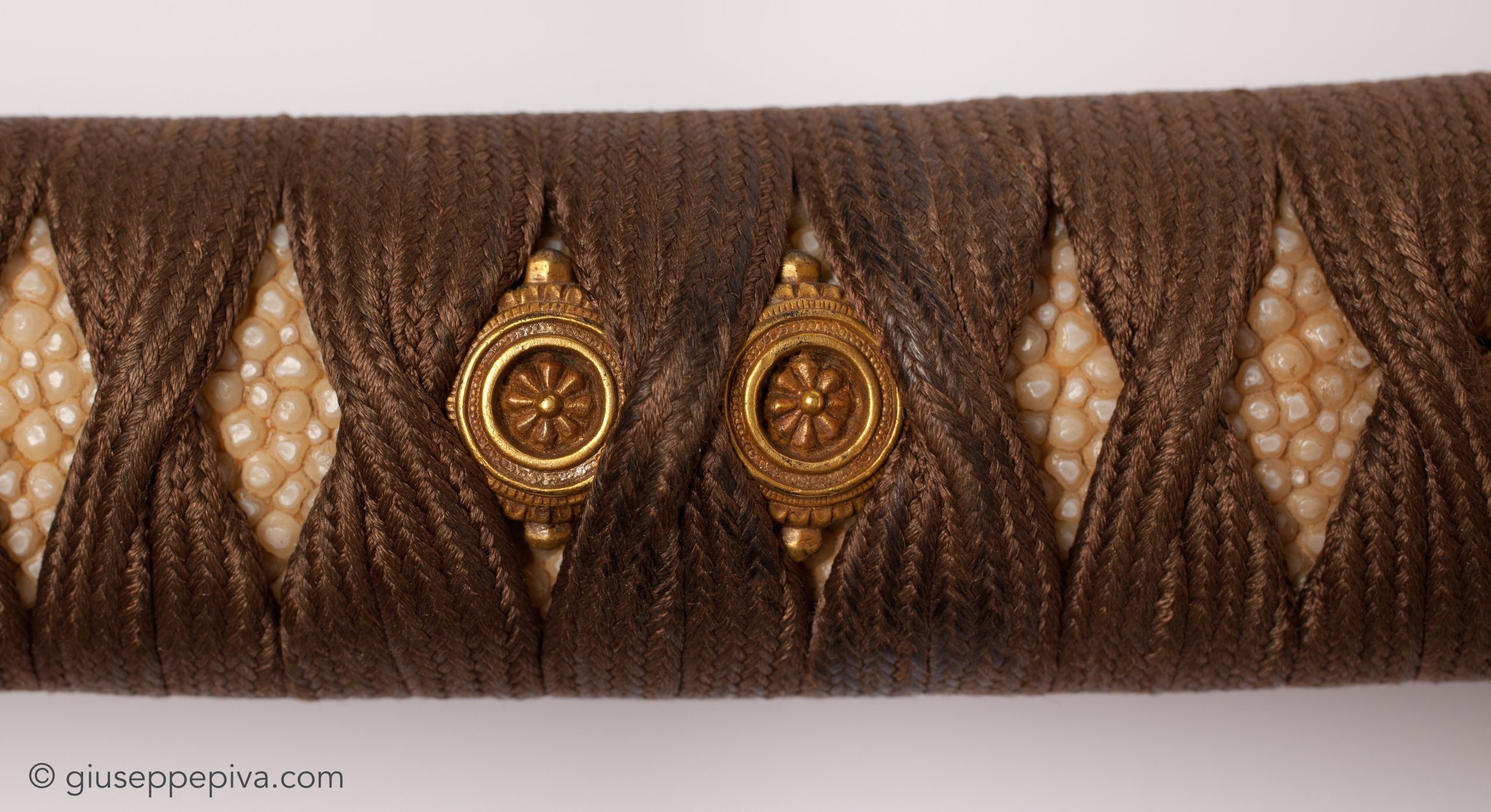
Two different kamon are featured throughout the koshirae: one of the katabami type and one of the rinpō type, rendered in lacquer on the scabbard and in gilded brass on the various components.