Azuchi-Momoyama period, late 16th century
Maki-e lacquer on wood
Height, 21.7cm
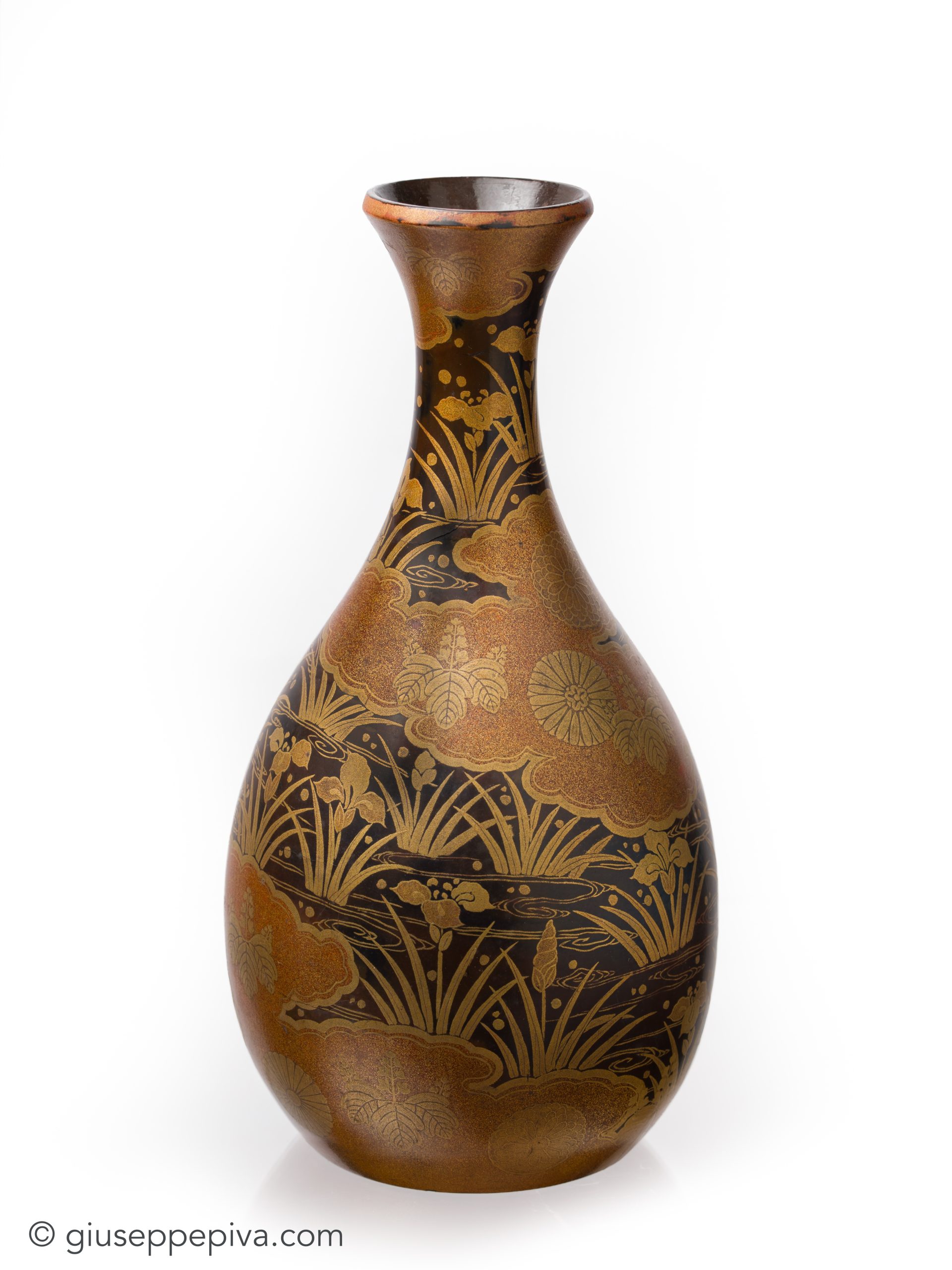
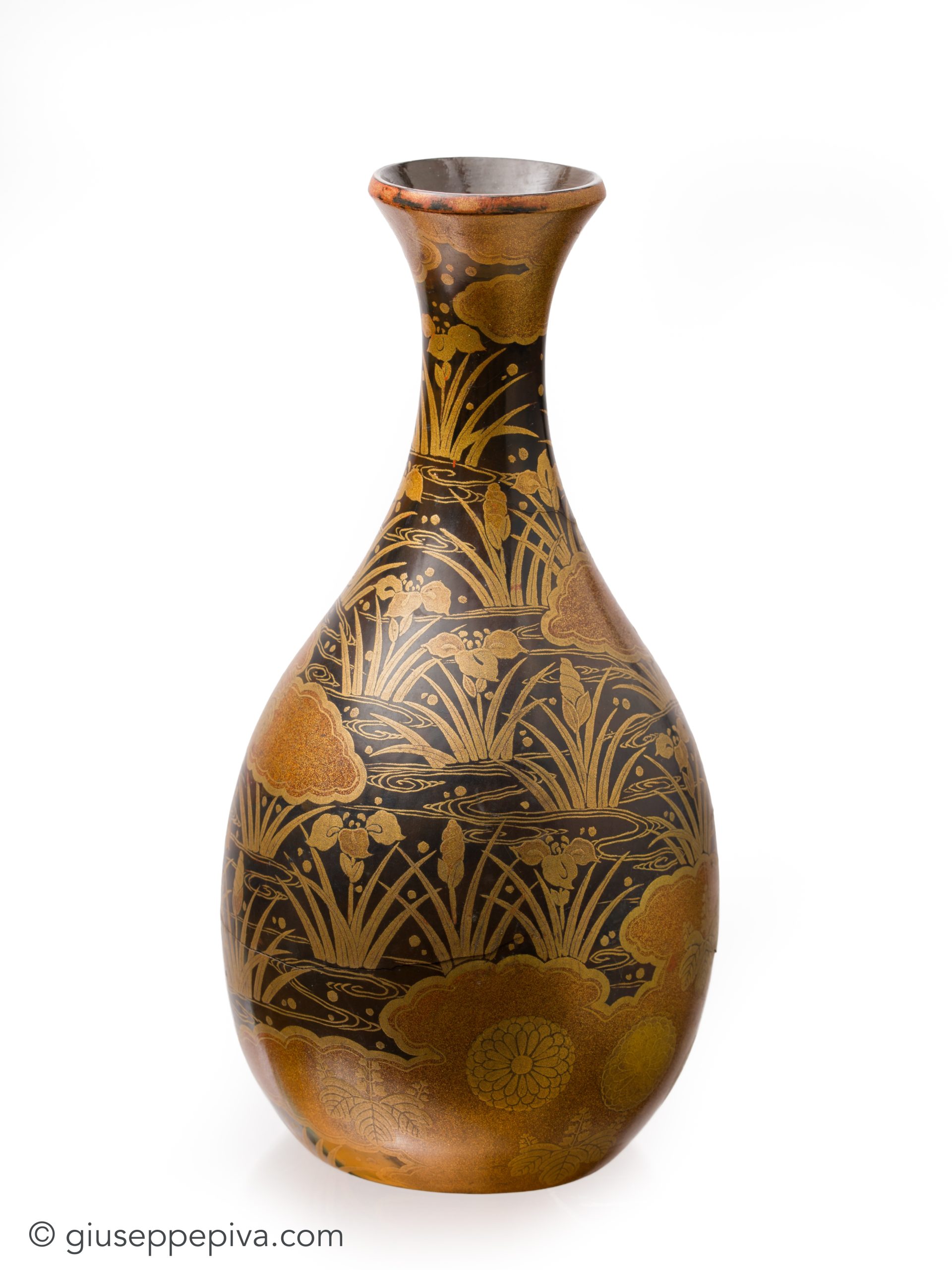
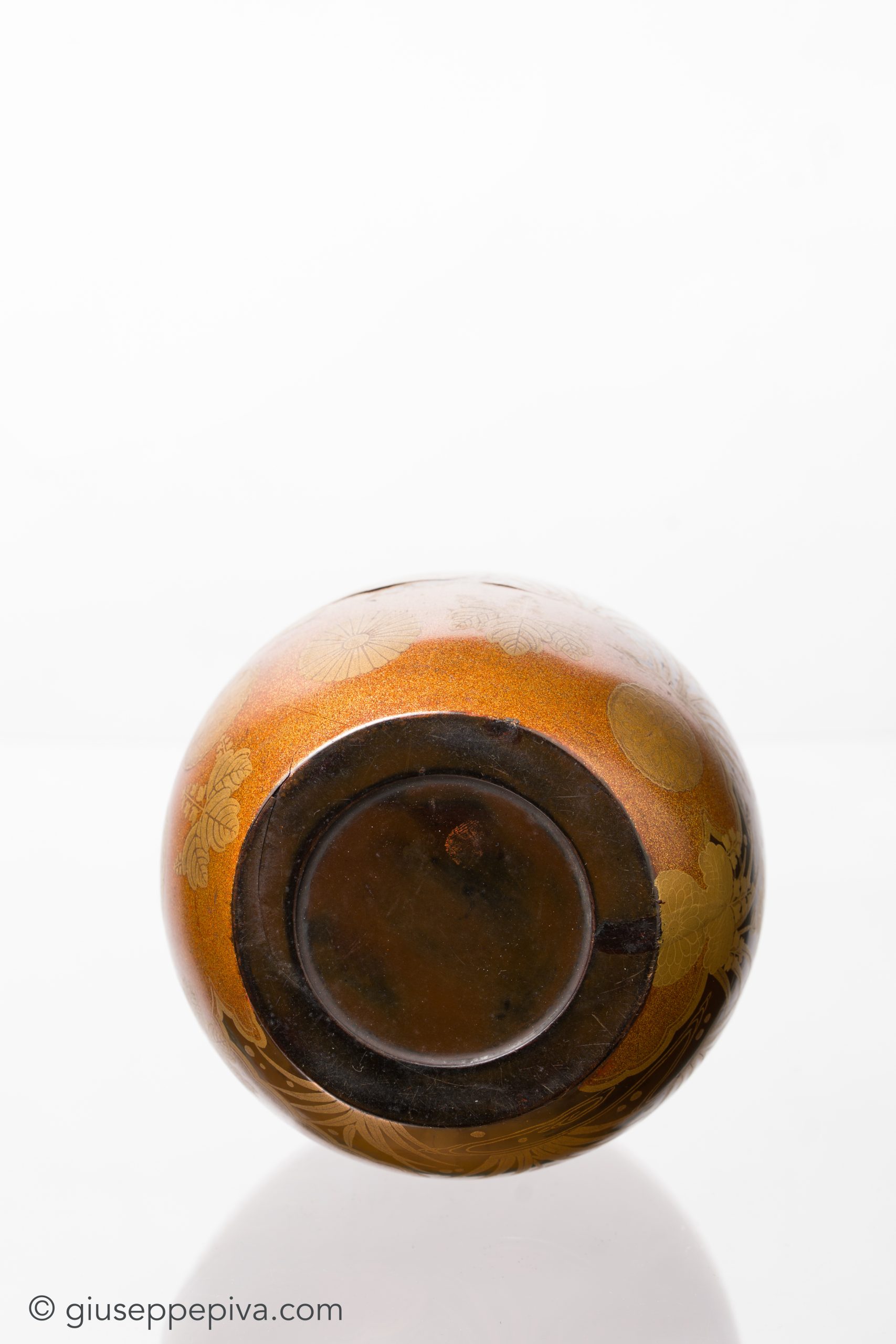
This tokkuri (sake bottle) shows a design with iris in a pond, rendered in gold over a black lacquered ground, with contrasting clouds in nashiji (pear-skin) ground of red-gold flecks on which floral motifs of chrysanthemums and paulownia are scattered with different styles.
The combination of techniques used to apply the design include gold hiramaki-e (flat sprinkle picture), e-nashiji (reddish “pear-skin” speckled surface used in specific areas) and harigaki (fine needle drawing on a dense gold ground). These three techniques are typical of the kodai-ji maki-e, a type of lacquerware decoration original from the Momoyama period. Until the medieval period, in fact, maki-e lacquer was used mostly to decorate furnishings for courtiers; during the 16th century, with the rise of the warrior class, a lavish new style of lacquerware emerged: tableware, furniture and objects, which had not previously been decorated in maki-e are now enriched with gold designs. The name of this decorative style originated in Kodai-ji, the temple that O-ne, the wife of Toyotomi Hideyoshi (1536-1598), built in Kyōto to pray for the repose of her husband. Quintessential examples of this style consist of the temple’s altar and Hideyoshi’s and O-ne’s interior furnishings, which have black lacquered surfaces decorated with autumn grasses in the maki-e technique.
The nashiji clouds bear two crests, the chrysanthemum and the paulownia. The chrysanthemum crest (kikumon: note that here they are rendered with various designs) originally belonged to the imperial household. Hideyoshi was granted the use of the chrysanthemum crest and he displayed it with great pride. It was one of many ways that he drew upon traditional symbols of the aristocracy to add legitimacy to his position as de facto ruler of Japan.
Along with the chrysanthemum crest, Hideyoshi also used the design of the seven-flowered flowering paulownia (kirimon). This symbol, too, was originally associated with the emperor, since it referred to a Chinese legend that the phoenix would alight in a special type of paulownia tree in the age of a righteous ruler. During the Muromachi period the paulownia crest was regularly given by the emperor to the Ashikaga shogun. Although Hideyoshi never took the title of shōgun, the emperor granted him use of the kirimon.
Price: 5.800 €
(Inv. #2162)