
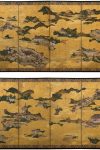
Scenes in and around the Capital
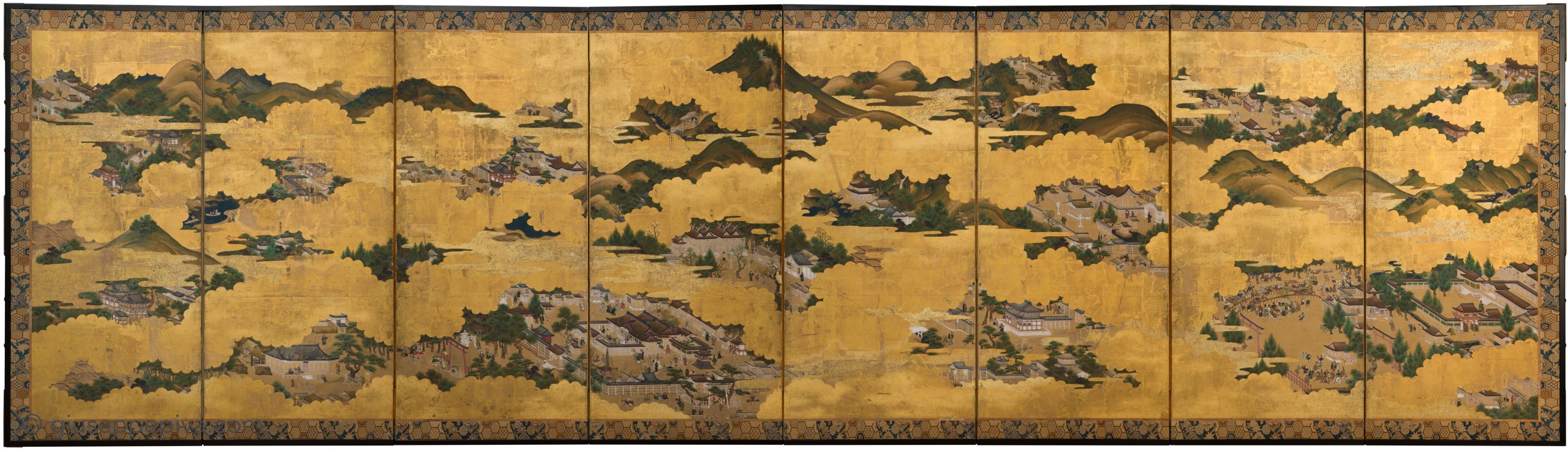
Pair of eight-panel folding screens
Ink, pigments and gold on paper
Early Edo period, 17th century
109.5 x 388 cm each
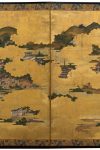
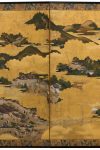
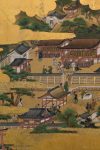
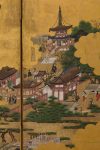
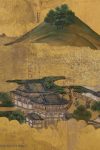
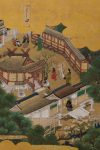
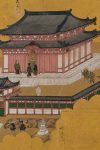
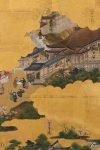
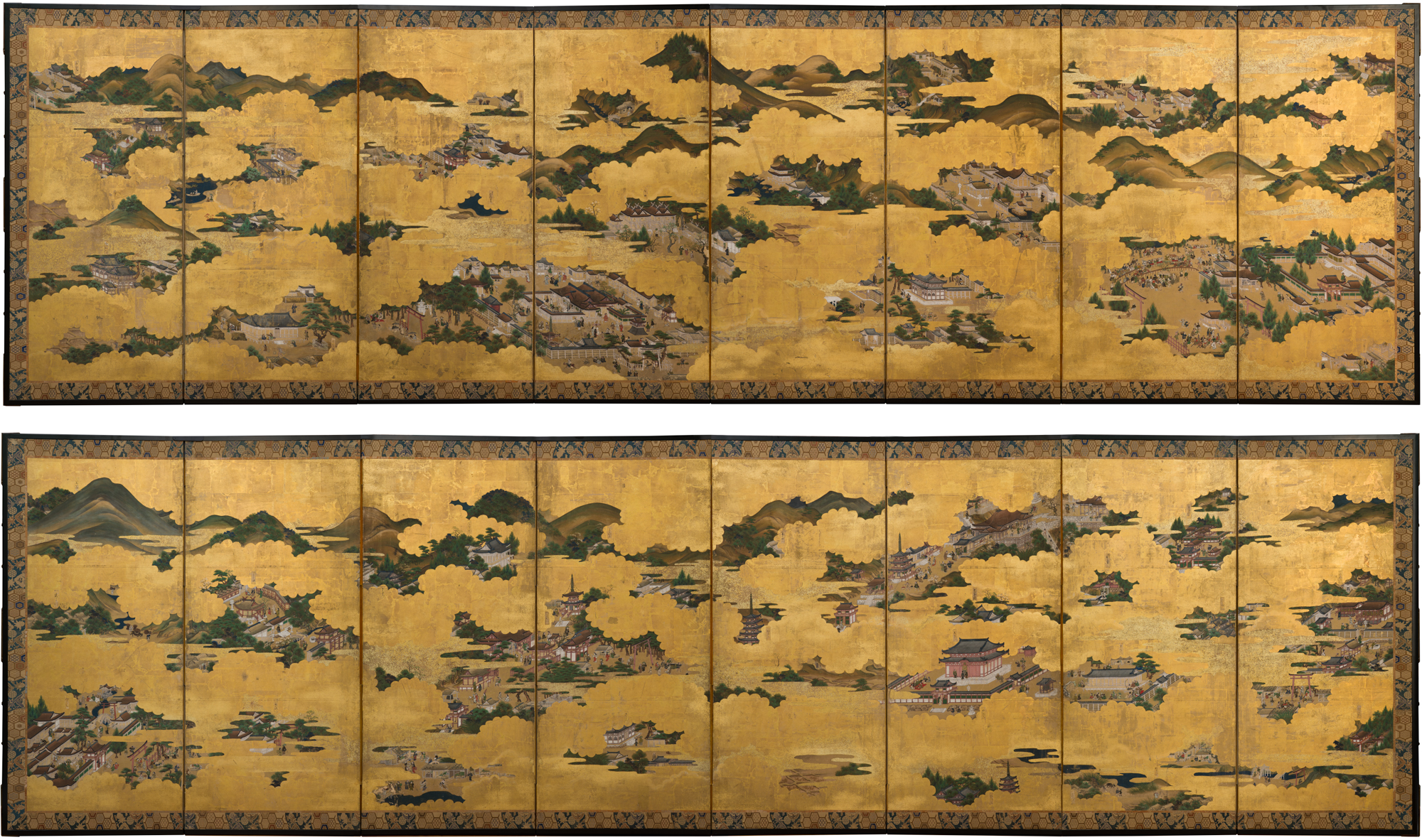
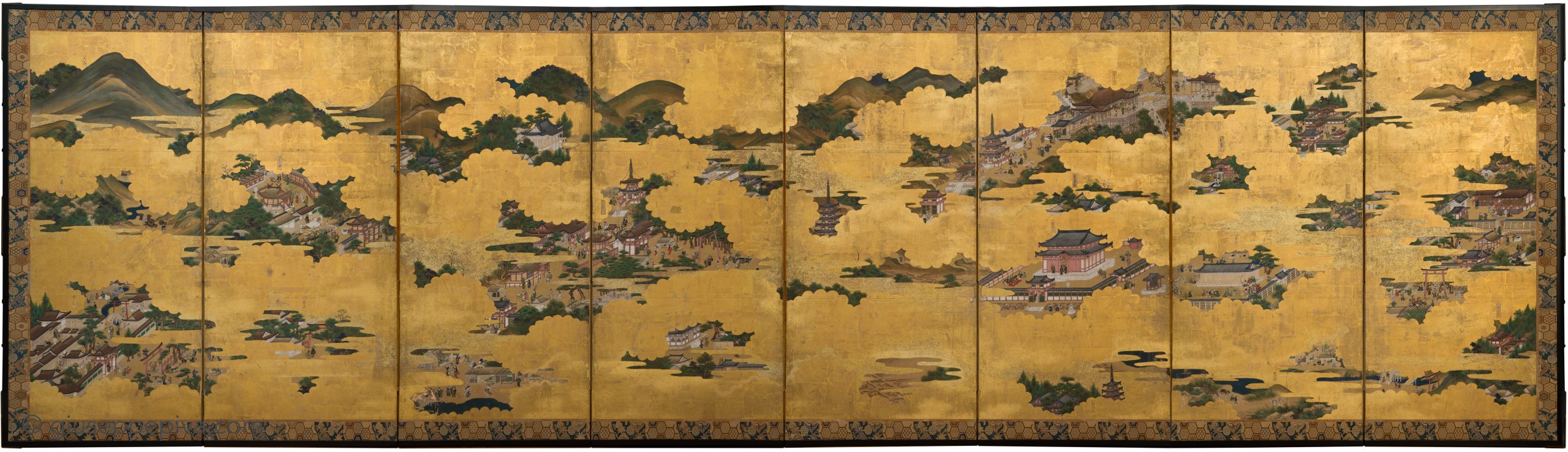
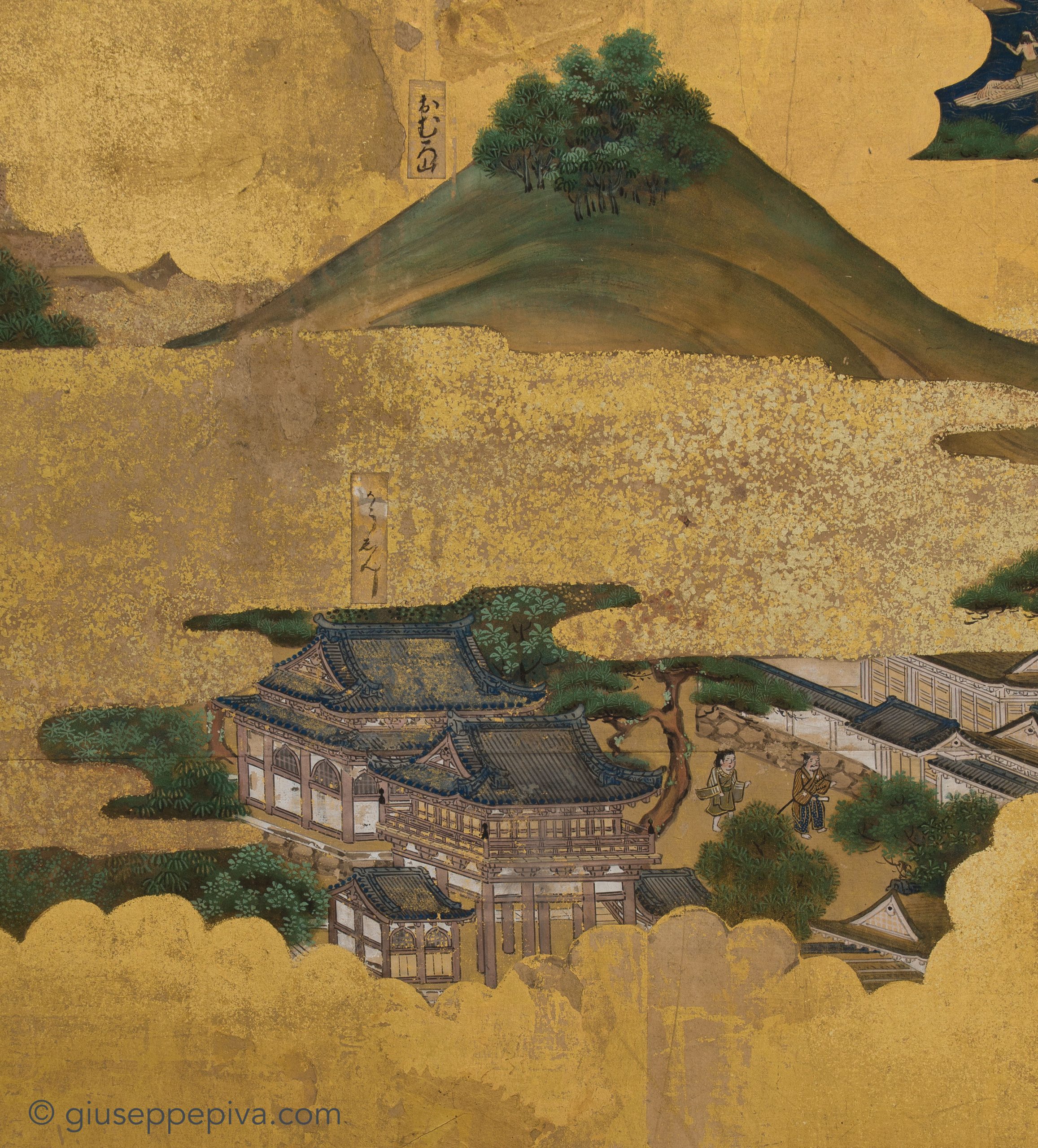
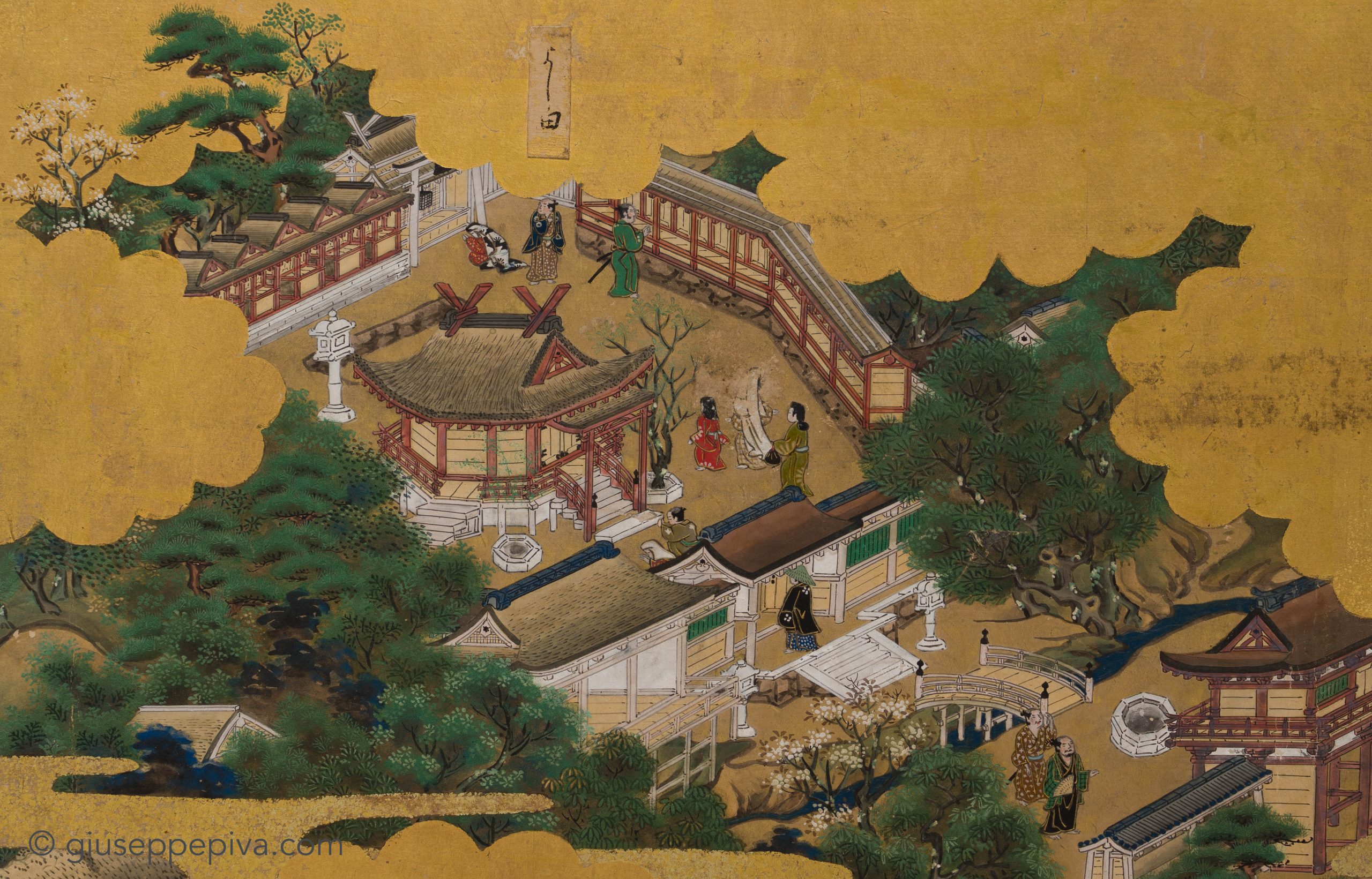
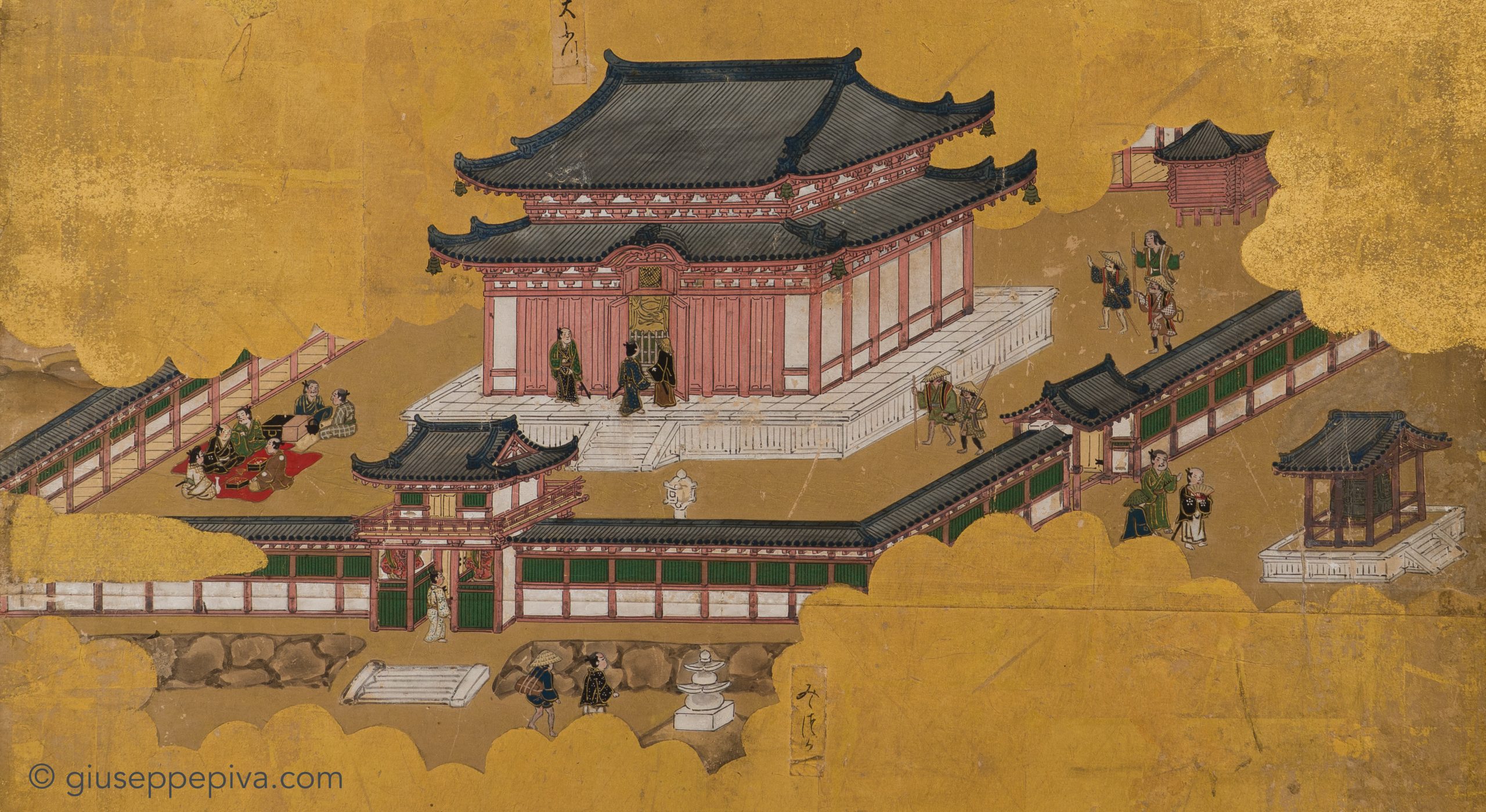
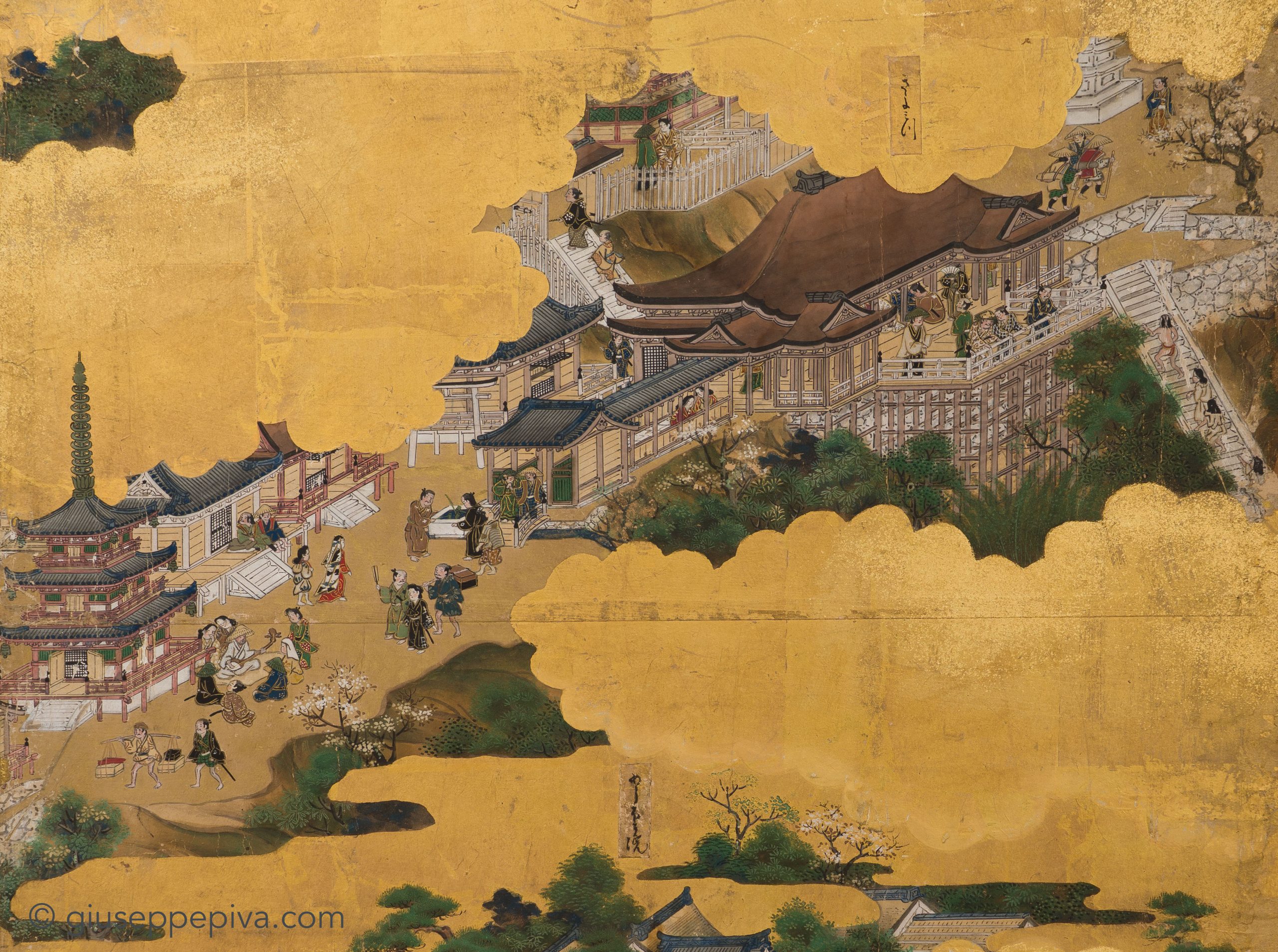
The map-like composition of this pair of screens depicts iconic sites in Kyoto (rakuchū) and its surroundings (rakugai), including temples, shrines and natural landmarks. Such panoramic views of the ancient capital, rich in detail and of endless fascination, first appeared in the early 16th century and remained in vogue until the mid-Edo period.
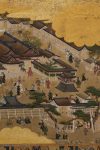
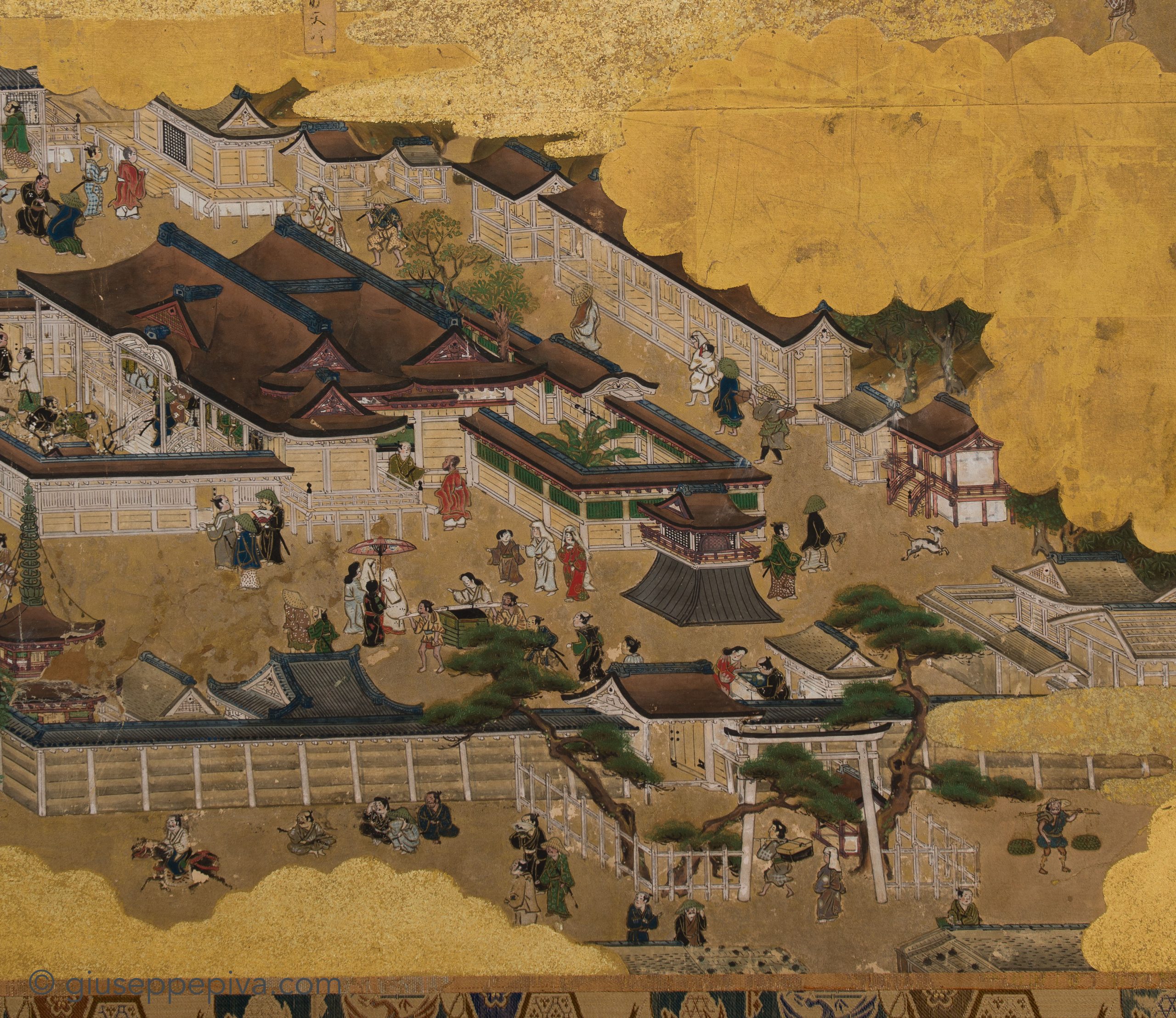
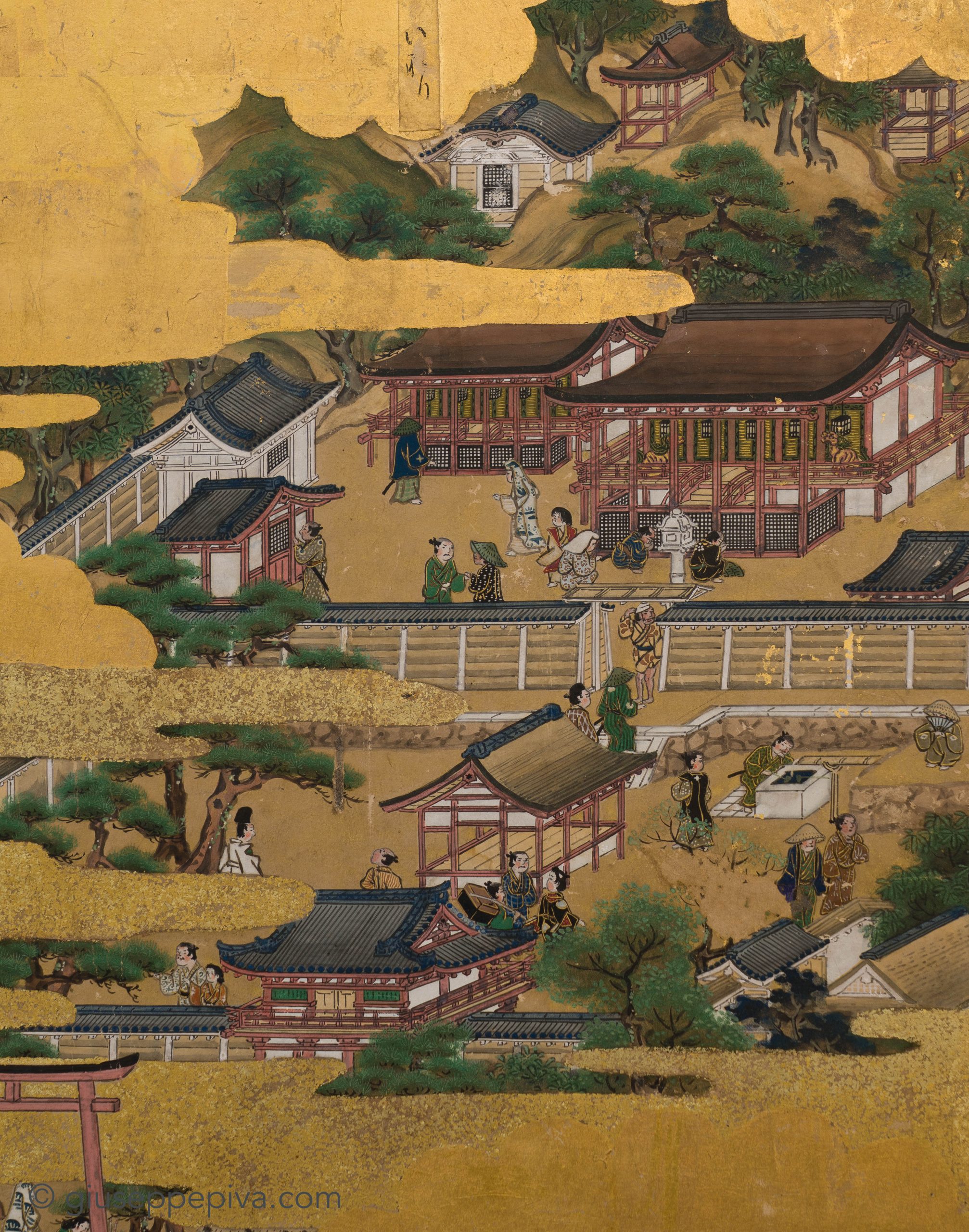
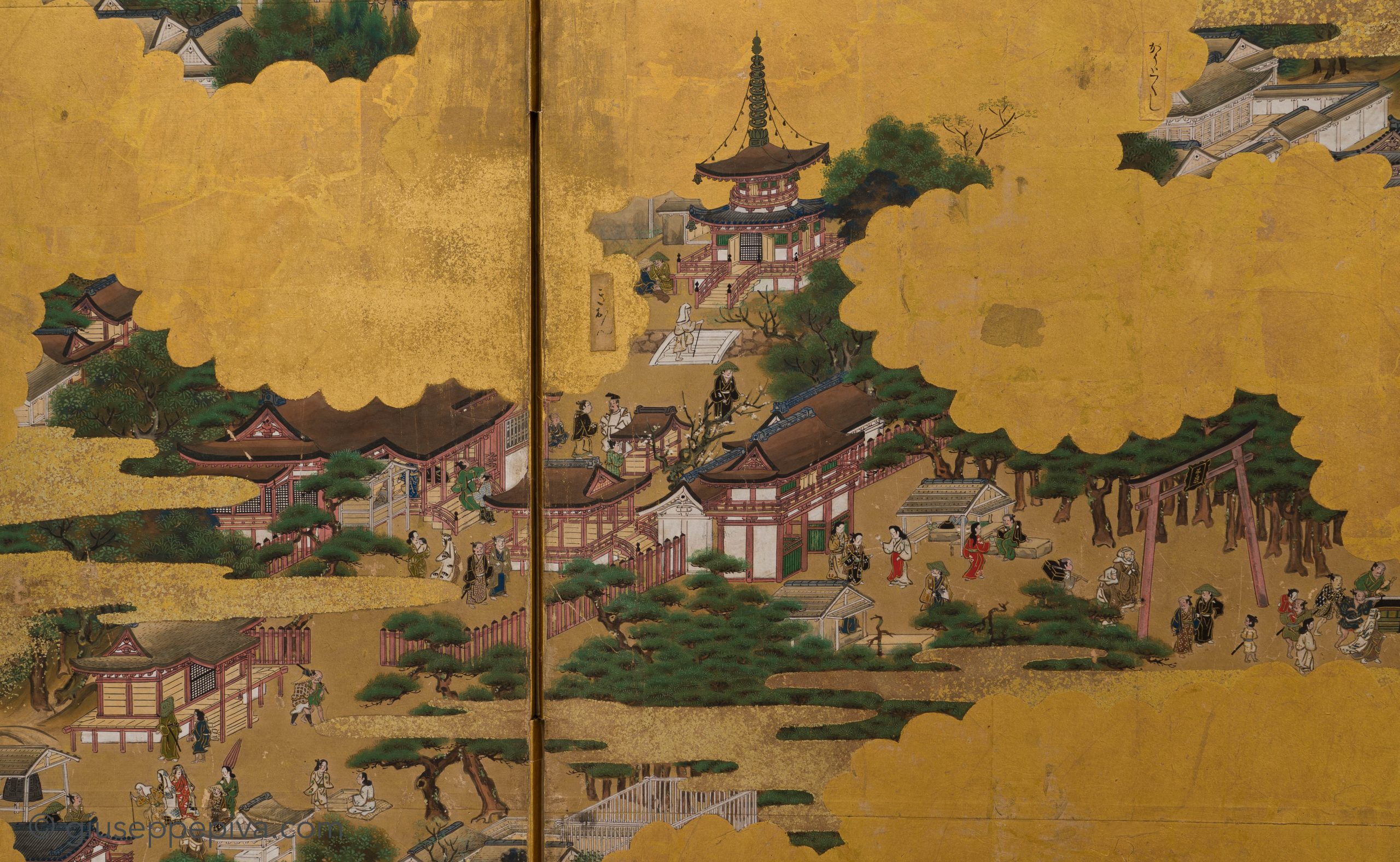
The buildings and scenes are rendered in a highly detailed style (saimitsuga) and painted in vivid colours with thick layers of pigment (dami-e). While the earliest examples of the genre depict only the sites themselves, the growing inclusion over time of festivals, street life, and the pastimes and daily occupations of ordinary people is regarded as a sign of changing interests and of a shift in patronage from the court to the warrior class, merchants and townspeople. The rakuchū rakugai-zu theme thus played a role in the transition from yamato-e to genre painting, from which later popular subjects derived, such as paintings of amusements, festivals and people at work.
The composition and selection of scenes on these screens follow the scheme of those painted by Kanō Eitoku in the second half of the 16th century, known today as the “Uesugi Screens”, with dense banks of golden clouds dividing and organising the space and framing the individual sites. Numerous details of busy urban life also animate the painting, with street vendors, pilgrims, monks, farmers, warriors and townspeople of every kind scattered throughout the composition.
The screens divide the city into its western half (left screen) and eastern half (right screen). Reading from right to left and from top to bottom, the notable sites depicted include:
Right screen (Eastern Kyoto):
Panel 1: Inari
Panel 2: Hōkoku Shrine, Sanjūsangendō
Panel 3: Kiyomizu-dera, Hōkō-ji, Tō-ji
Panel 4: Yasaka Pagoda
Panel 5: Maruyama, Gion Shrine (Yasaka), Kennin-ji
Panel 6: Chion-in, Nanzen-ji
Panel 7: Yoshida Shrine, Shirakawa
Panel 8: Mount Hiei, Mitarashi (Shimogamo)
Left screen (Western Kyoto):
Panel 1: Kurama-dera
Panel 2: Kamigamo Shrine
Panel 3: Kurabe-uma horse race at Kamigamo
Panel 4: Kinkaku-ji
Panel 5: Mount Atago, Hirano
Panel 6: Seiryō-ji, Hirosawa
Panel 7: Tenryū-ji, Hōrin-ji
Panel 8: Matsuo, Saihō-ji, Rinsen-ji
Notably, the Gion Shrine is shown without the stone torii erected in 1646, suggesting that the screens predate that year. Moreover, the Hōkoku Shrine, with Toyotomi Hideyoshi’s mausoleum on Mount Amidagamine, appears intact and frequented, although it was suppressed by the Tokugawa in 1615 and subsequently left to decay: this points to a date before that year or shortly after, while the memory of the shrine was still fresh. From a stylistic standpoint, an early dating is further supported by the relative scarcity of genre scenes and the greater emphasis on architecture and landscape.
![A pair of two-panel screens, Rimpa school [each 159 x 161 cm]](https://www.giuseppepiva.com/wp-content/uploads/2025/03/byo387-rinpa1-Modifica-1280x570.jpg)
![A pair of screens with cherry blossom at Mount Yoshino [172 x 377 cm]](https://www.giuseppepiva.com/wp-content/uploads/2018/04/1434-Yoshino-Byobu-01-scaled.jpg)
![Six- panel screen with flowers from the four seasons [66 x 221 cm]](https://www.giuseppepiva.com/wp-content/uploads/2016/11/867-Fiori-piccolo-paravento-04-scaled.jpg)
![Six-panel screen depicting Japanese festivals [172 x 374 cm]](https://www.giuseppepiva.com/wp-content/uploads/2025/02/177520Byobu20Matsuri-scaled.jpg)