Author: redattore

During the Edo period, the sankin kōtai system required every daimyō—the feudal lords of Japan—to alternate residence between Edo (modern-day Tokyo), the political center of the Tokugawa shogunate, and their provincial domains. While the lord himself traveled to and from the capital, usually on an...

The Umetada school was one of the pivotal centers of sword-related arts between the late Momoyama period and the early Edo era. Founded in Kyōto, it stood out for its versatility and outstanding quality, covering all fields associated with the katana: restorations, horimono, suriage, kinzogan-mei,...

Among the most evocative names in the history of Japanese sword art, Nobuie (信家) holds a place of distinction. His tsuba have been admired for centuries for their expressive power and refined simplicity, which make them unmistakable. But who was Nobuie? Why do collectors and...

Hirata Hikozo (1590? - 1635) is one of the most famous Higo craftsmen, also a master of the first generations of Jingo and Kanshiro. He worked under the patronage of Hosokawa Sansai, an important samurai and tea ceremony master, who was a disciple of Sen...

Private collectionMyōchin Muneakira is considered the best skilled armor maker of Japan during the Edo period. At the age of 12, he began his apprenticeship with Munesuke, his uncle, focusing on the complex skill of iron embossing (uchidashi), where Munesuke himself had achieved an exceptional...

Before entering the fascinating world of menpō, the masks of samurai armor, it is essential to understand their importance and function within the armor of Japanese warriors. The term "menpō" refers to the face protection used in samurai armor, made primarily of iron but occasionally...

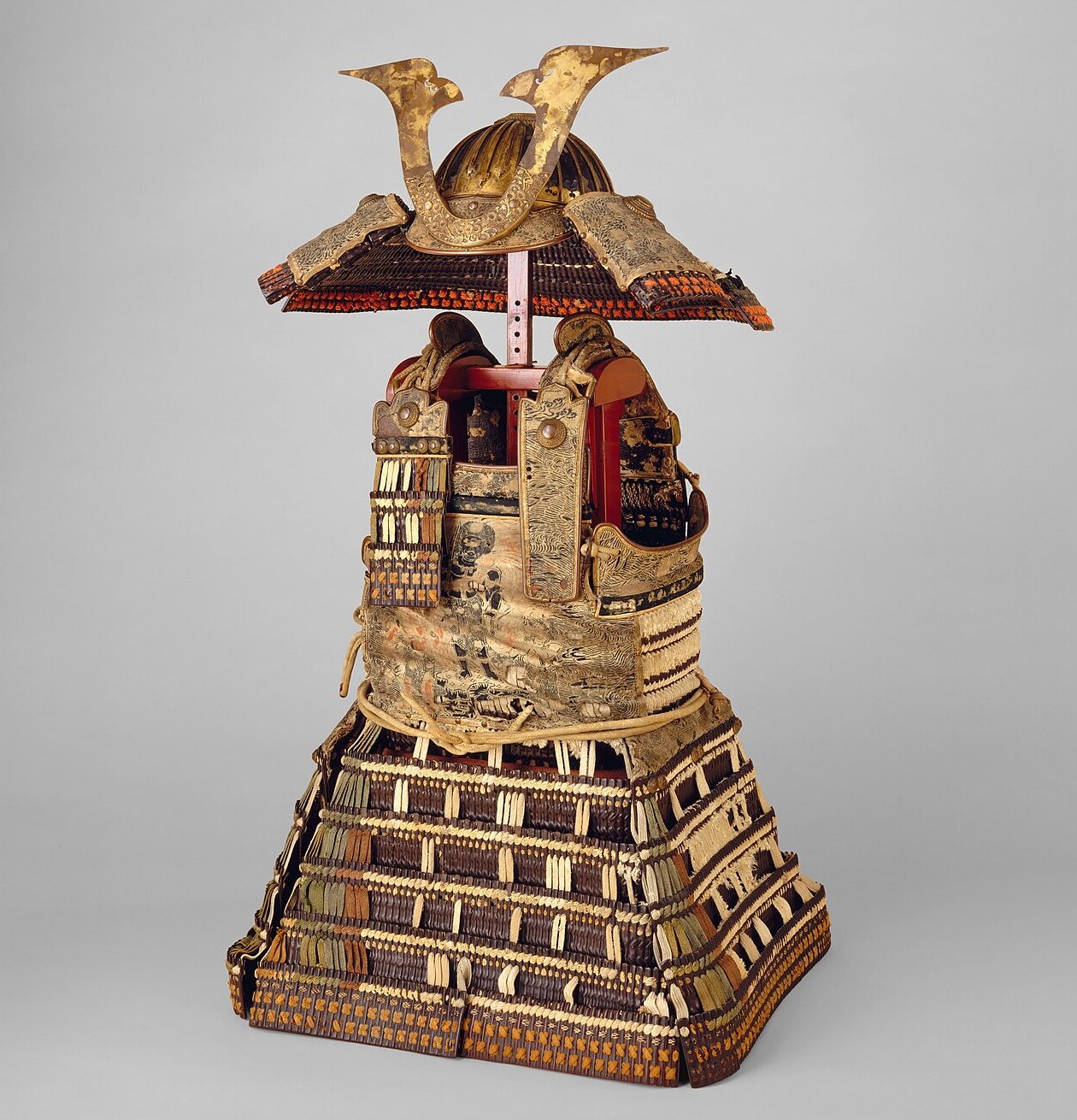
Samurai armor, not only a testament to craftsmanship but also to unparalleled functionality, has distinctly marked the eras of Japanese wars. In this insight, we explore how the effectiveness of armor has evolved through time, focusing on the distinction between medieval armor and that of...

 The great generals who led the battles of the great samurai armies in Japan's Sengoku Jidai, the period of civil wars that inflamed the empire between 1467 and 1603, are often remembered wearing their armor. Such armor is almost always characterized by unique specifications, such...

The Deep Meaning of Samurai Armor Collecting: Beyond the Object, HistoryCollecting goes far beyond the mere collection of objects; it is an immersion in the stories steeped in history that such objects carry. In the case of samurai armor, this connection to the past becomes...